
Is Your Child Still Wide Awake an Hour After Bedtime?
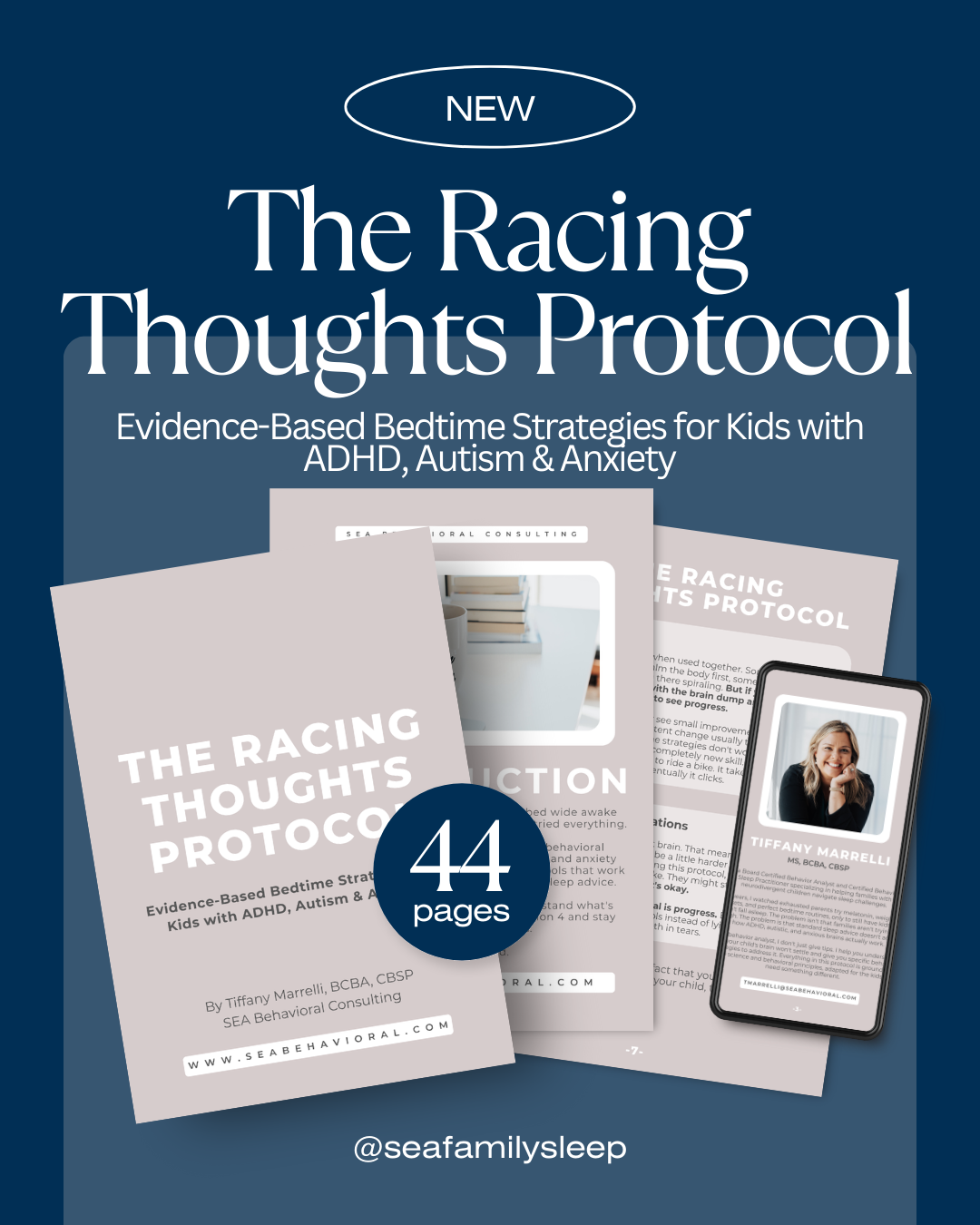
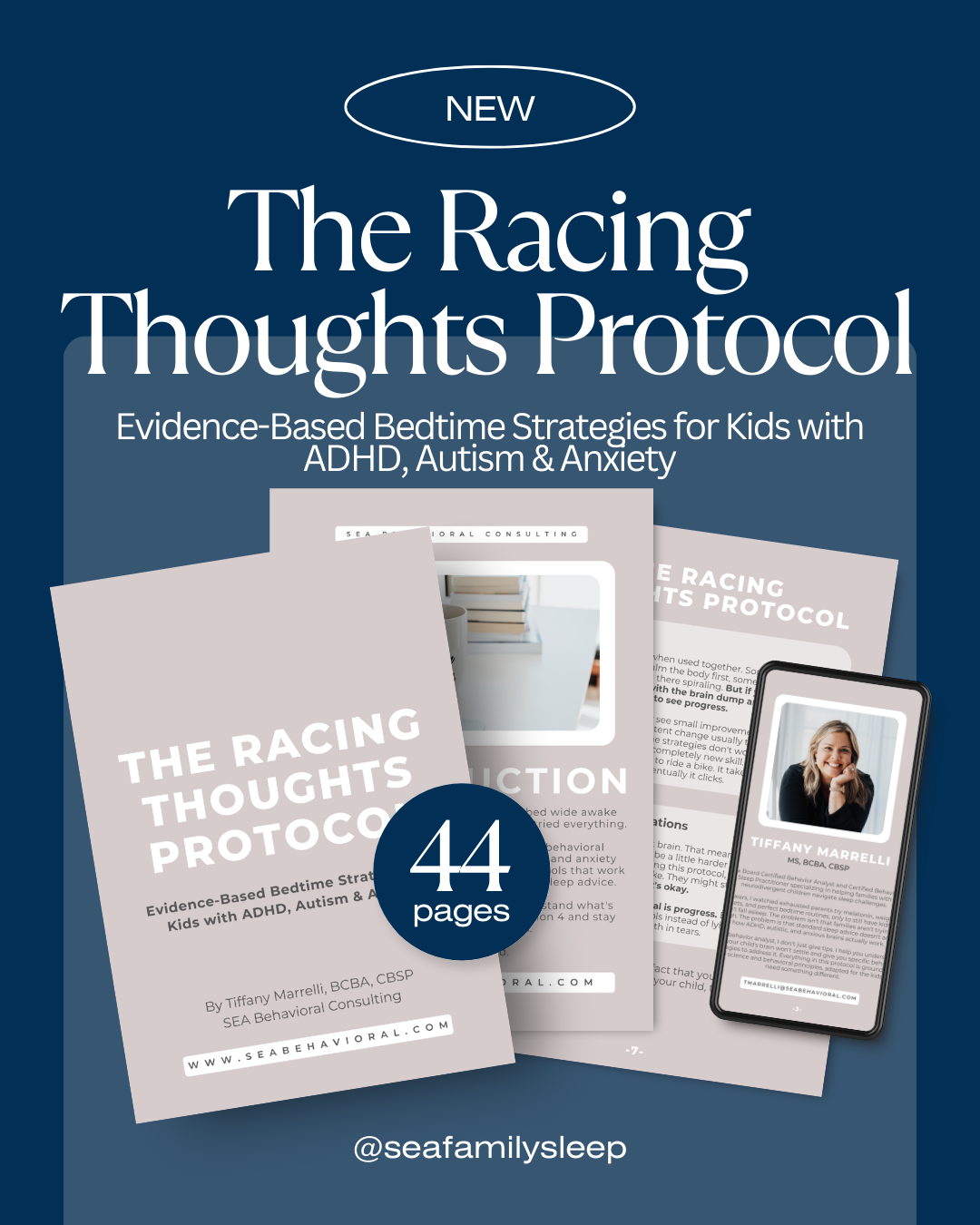
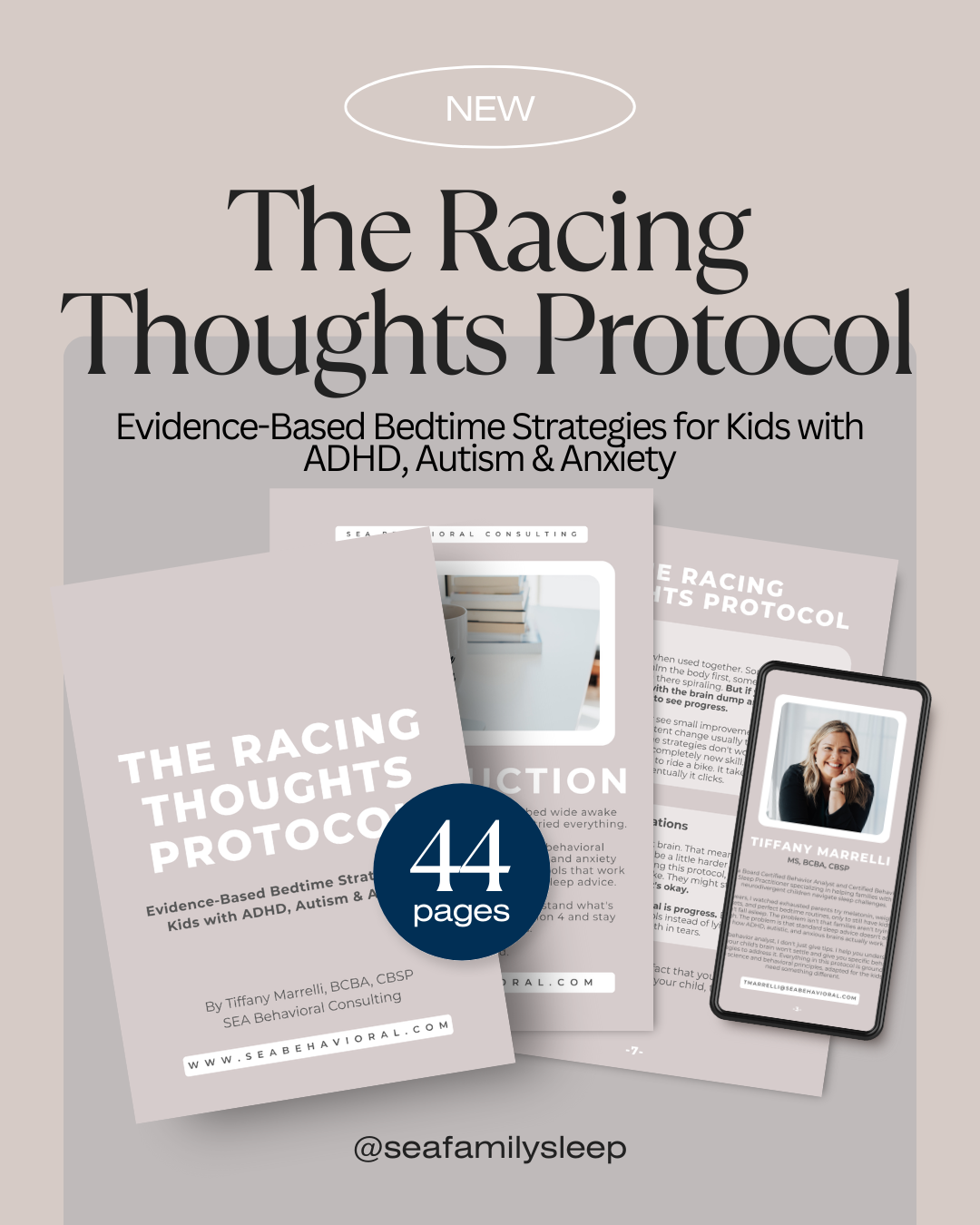
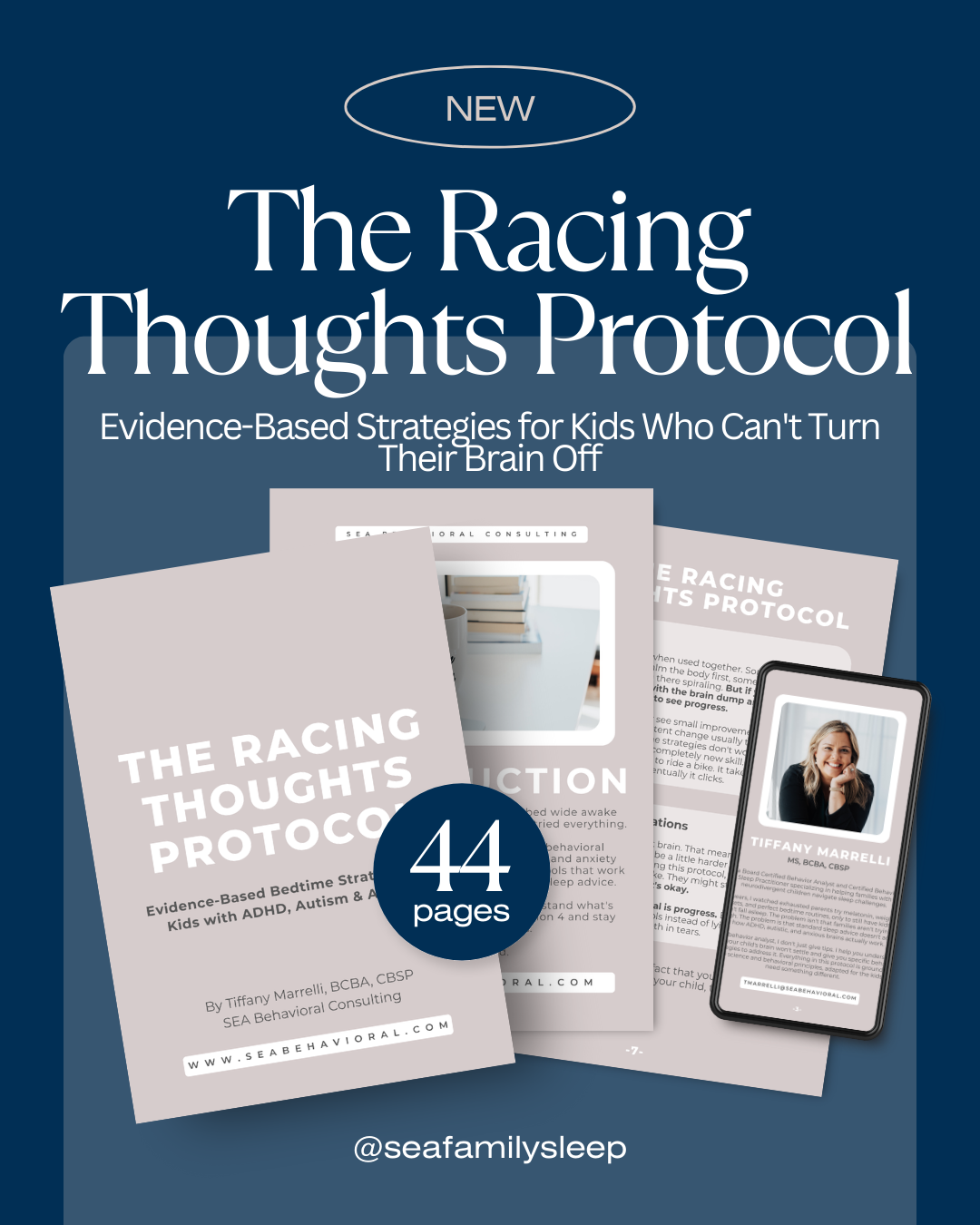
The Racing Thoughts Protocol: Evidence-based strategies for kids ages 5-12 with ADHD, autism, and anxiety who can't turn their brain off at bedtime.

Bedtime shouldn't take two hours. But if your child has ADHD, autism, or anxiety, you know it often does. They're lying there, tossing and turning. Their mind is racing. And even though they're exhausted, they just can't seem to fall asleep.You've probably tried melatonin, weighted blankets, and every sleep tip you can find online. Some things help a little. Nothing seems to fix it completely. And honestly? You're exhausted too.
Here's what I've learned working with hundreds of families like yours: Kids with ADHD, autism, and anxiety aren't being difficult at bedtime. Their brains genuinely struggle to transition from alert mode to sleep mode. They need specific strategies that match how their brains actually work - not generic sleep tips designed for neurotypical kids. That's what this protocol provides.

“The strategies are down to earth, logical, and don’t cost a penny to implement.”
“I highly recommend this protocol to parents! The only thing better than the wealth of evidence based approaches Tiffany provides is how she makes them so incredibly accessible to parents. The strategies are down to earth, logical, and don’t cost a penny to implement. These are exactly the type of solutions the families I work with are looking for, and I will personally follow these steps if my own children have racing thoughts.”
— Lindsay Fletcher, Ph.D.
Psychologist and Mom of 2
WHAT YOU GET
✓ 44-page comprehensive guide
✓ 5 evidence-based core strategies
✓ Complete nightly implementation plan
✓ Progress tracking tools
✓ Troubleshooting guide
✓ When to seek additional help
The 5 Core Strategies:
1. Brain Dump + Parking Lot Method
Get racing thoughts OUT of their working memory and onto paper so their brain can actually rest
2. Boring the Brain Technique
Give their brain something repetitive and dull to focus on instead of spiraling thoughts
3. Progressive Relaxation Training
Help their body physically calm down, even when their mind is racing
4. Behavioral Expectations System
Clear boundaries and motivation that works with ADHD/autism brains
5. 20-Minute Reset Protocol
What to do when they're still wide awake after trying everything .
THIS PROTOCOL IS FOR YOU IF:
✓ Your child has ADHD, autism, anxiety, or a combination
✓ They lie awake with racing thoughts even when exhausted
✓ Ages 2-12 (strategies adapt to developmental level)
✓ You've tried routines, melatonin, and "sleep hygiene" but nothing works
✓ You're desperate for evidence-based strategies that actually address WHY they can't sleep
✓ You're ready to implement something tonight
Note: This protocol specifically addresses racing thoughts at bedtime. If your child has suspected medical sleep issues (sleep apnea, etc.), start with a medical evaluation. If your primary concern is frequent night wakings rather than difficulty falling asleep, stay tuned for future protocols.
WHAT MAKES THIS DIFFERENT?
Most sleep advice you'll find online is designed for neurotypical kids. It doesn't account for how ADHD, autism, and anxious brains work differently. This protocol uses behavioral strategies specifically suited for kids whose brains need a different approach:
✓ Explains WHY their brain struggles (delayed melatonin onset, dopamine-seeking, executive function challenges)
✓ Works WITH their neurodivergence, not against it
✓ Practical steps you can actually implement tonight
✓ Clear instructions so you know exactly what to do
✓ Realistic expectations about timing and progress

WHAT TO EXPECT:
These strategies are grounded in behavioral science and sleep research. Most families see noticeable improvement within the first week of consistent implementation - though real, sustainable change typically takes 4-6 weeks as your child learns new skills.
You'll know exactly what to do, why it works for neurodivergent brains specifically, and how to troubleshoot when something isn't clicking yet.
If racing thoughts are part of a more complex sleep picture (severe anxiety, medical issues, trauma), this protocol gives you solid foundational strategies while you work with your support team.

A LITTLE
ABOUT ME
I’m Tiffany Marrelli, MS, BCBA, CBSP - a Board Certified Behavior Analyst and Certified Behavioral Sleep Practitioner in Ohio.
I specialize in working with families of neurodivergent children ages 2-12, and sleep is one of the biggest challenges I hear about.
I created this protocol because I kept meeting exhausted parents who'd tried everything on their own and felt stuck. They needed strategies designed specifically for how their child's brain works.
Not generic sleep hygiene tips. Not another supplement recommendation. Actual behavioral strategies based on how ADHD, autism, and anxiety affect sleep neurologically.
That's what this is.
GET THE PROTOCOL
The Racing Thoughts Protocol ($27)
✓ Instant PDF download
✓ 44 pages, 5 strategies
✓ Complete implementation plan
✓ Start implementing tonight
FAQs
-
No. Most kids with ADHD/autism already HAVE routines— they just can't fall asleep even with perfect routines. This protocol addresses what happens AFTER you put them to bed, when their brain won't shut off. These are neurologically-informed strategies for the 30-90 minutes of lying awake.
-
Ages 5-12. The strategies adapt to your child's developmental level. Younger kids (5-7) need more parent involvement; older kids (8-12) can learn to use strategies independently.
-
Yes! The strategies are designed for complex presentations. Many kids have co-occurring diagnoses, and the protocol addresses the overlapping sleep challenges.
-
This protocol provides evidence-based strategies you can implement on your own. For complex situations or if strategies aren't working after 2-3 weeks, individualized consultation may be beneficial. The guide includes information on when to seek additional support.